

Summary:
- The Shenzhen economy 2026 reached approximately $537 billion in GDP with 5.5% annual growth — the highest among China’s major cities — with strategic emerging industries (robotics, AI, EVs, biotech) now contributing 43% of total output.
- Shenzhen’s robotics sector alone hit a record 242 billion yuan (~$35.4 billion) in output value in 2025, up over 20% year-on-year, with the city now home to more than 2,600 AI enterprises above designated scale and over 1,000 core robotics companies.
- The Shenzhen-Hong Kong-Guangzhou innovation cluster overtook Tokyo-Yokohama to rank #1 globally in WIPO’s 2025 Global Innovation Index — the first time any cluster has displaced Tokyo-Yokohama from the top spot.
- Indonesia’s own industrial buildout already shows early parallels to what Shenzhen underwent roughly a decade ago — the $1.1 billion Hyundai-LG battery plant in Karawang and BYD’s $1 billion Subang EV facility are the same category of infrastructure investment that preceded Shenzhen’s compressed transformation.
A 40-Year Transformation, Compressed
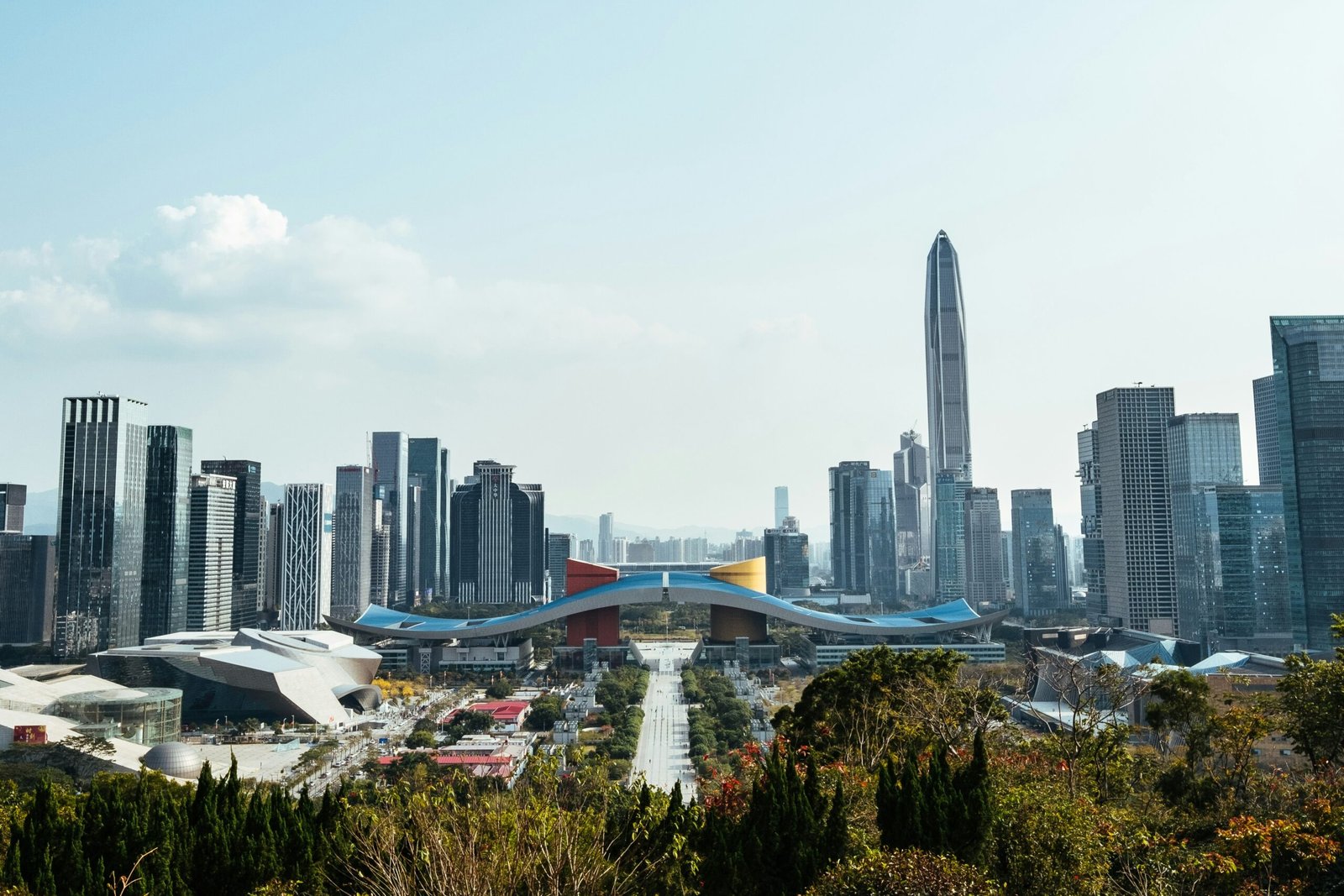
Shenzhen’s story is useful to Indonesian executives because of its timeline. In 1980, the city was a relatively small settlement with a population of approximately 30,000. Today, it is one of China’s most important technology, manufacturing, and innovation centres.
Shenzhen’s GDP increased from approximately 2.83 trillion yuan in 2020 to 3.87 trillion yuan in 2025. This represents an average annual growth rate of approximately 6.5% over the period, illustrating the scale of its economic expansion.
That transformation was not purely organic. It was substantially shaped by industrial policy, investment in infrastructure, and the development of manufacturing capabilities.
The city’s “20+8” industrial cluster strategy targets 20 pillar industries and eight future industries. These priorities include robotics, artificial intelligence, advanced manufacturing, and other strategic technology sectors.
For Indonesia, the lesson is not to copy Shenzhen exactly. It is to understand how a city can align public policy, private investment, infrastructure, and industrial capabilities to accelerate economic development.
What's Already Operating at Scale in Shenzhen
The most useful aspect of studying Shenzhen today is seeing which technologies have moved beyond demonstrations and into commercial production.
Robotics is one of the clearest examples. Shenzhen’s robotics industry recorded approximately 242.6 billion yuan in output value in 2025, representing year-on-year growth of around 20.6%, according to the cited industry reporting.
The city produced approximately 194,900 industrial robots and nearly eight million service robots in 2025. These figures demonstrate the depth of its robotics ecosystem and the scale of its manufacturing capabilities.
Shenzhen’s robotics ecosystem extends beyond individual manufacturers. Component suppliers, software developers, universities, investors, and industrial customers operate within a closely connected environment.
This concentration allows companies to develop products, test components, refine manufacturing processes, and commercialise technologies within a relatively integrated supply chain.
For Indonesian businesses, this is an important distinction. Buying a robot is not the same as building the industrial capabilities required to manufacture, integrate, maintain, and improve robotic systems.
Artificial Intelligence and Industrial Investment
Artificial intelligence is another major component of Shenzhen’s economic development.
The city has developed a substantial AI ecosystem, spanning software, hardware, computing infrastructure, and embodied intelligence. Industry reports have identified more than 2,600 AI enterprises above designated scale in Shenzhen.
Public and private investment has also increasingly targeted specific technology categories rather than innovation in general. Dedicated funding mechanisms can help businesses commercialise technologies and connect research with industrial demand.
For Indonesian executives, this raises an important question: which AI applications can deliver measurable commercial value within their own operations?
Manufacturers may focus on quality inspection, predictive maintenance, and production planning. Logistics companies may explore route optimisation and warehouse automation. Retailers may benefit from demand forecasting and customer service automation.
The opportunity is not simply to adopt AI because it is attracting attention. It is to identify applications that improve productivity, reduce operating costs, or create new sources of revenue.
Electric Vehicles and Integrated Commerce
Electric vehicles and digital commerce have become increasingly visible parts of Shenzhen’s urban economy.
The city is closely associated with companies developing electric vehicles, batteries, electronics, and connected technologies. Its manufacturing ecosystem also supports the components and systems required to bring these products to market.
Digital platforms have changed how consumers discover products, make payments, and interact with businesses. The combination of manufacturing capacity and digital infrastructure creates opportunities for companies to coordinate product development, distribution, and customer engagement.
Indonesia is moving through its own digital and industrial transition. However, adoption rates, infrastructure readiness, consumer behaviour, and regulations differ between the two markets.
Indonesian businesses should therefore study Shenzhen to identify relevant business models rather than assume that every technology or platform will succeed in the same way locally.
The Shenzhen-Hong Kong-Guangzhou Cluster: A Global No. 1
Shenzhen’s development cannot be understood by examining the city in isolation. It forms part of the broader Guangdong-Hong Kong-Macao Greater Bay Area, which connects manufacturing, finance, research, logistics, and international business.
The Shenzhen-Hong Kong-Guangzhou innovation cluster ranked first in WIPO’s 2025 Global Innovation Index cluster ranking, overtaking Tokyo-Yokohama.
The ranking considers indicators associated with innovation, including patent activity, scientific publications, and venture capital investment. It reflects the concentration of research and commercial innovation across the wider cluster.
Shenzhen’s research and development spending reached approximately 245.31 billion yuan in 2024, according to the cited figures. Businesses accounted for the overwhelming majority of this expenditure.
This matters because private-sector participation helps connect research with commercial demand. Companies can invest in product development while drawing on local suppliers, research institutions, skilled workers, and investors.
For Indonesia, the practical lesson is that an innovation ecosystem requires more than technology parks or research facilities. It also needs businesses that can commercialise ideas, skilled talent, access to capital, and customers willing to adopt new solutions.
The Early Parallels Already Visible in Indonesia
The comparison between Shenzhen and Indonesia becomes more meaningful when it focuses on concrete industrial investments.
Indonesia has been developing its EV and battery manufacturing capabilities, supported by its nickel resources, domestic market, and efforts to attract international manufacturers.
EV Battery Manufacturing in Karawang
Hyundai and LG Energy Solution established HLI Green Power, an EV battery cell manufacturing joint venture in Karawang, West Java. The facility was officially launched in July 2024, with an initial annual production capacity of 10 GWh.
The investment represents an important step in developing Indonesia’s domestic battery manufacturing ecosystem.
Its long-term significance extends beyond the production of battery cells. A more developed ecosystem could create opportunities in materials processing, component manufacturing, engineering, logistics, and battery-related services.
For local businesses, these developments create questions worth investigating. Which components will be sourced domestically? What technical standards must suppliers meet? Which capabilities are missing from the local supply chain?
Businesses that answer these questions early may be better positioned to identify opportunities as the industry develops.
BYD and Indonesia’s EV Industry
BYD has also invested in developing vehicle manufacturing capabilities in Indonesia, including its planned production facility in Subang, West Java.
The development reflects Indonesia’s broader ambition to attract EV manufacturers and build a more integrated domestic automotive industry.
However, vehicle assembly alone does not guarantee a complete industrial ecosystem. The extent of localisation, the availability of qualified suppliers, technology transfer, workforce development, and access to regional export markets will influence the industry’s long-term impact.
This is where Shenzhen offers a useful comparison. Its manufacturing ecosystem developed through the interaction of component suppliers, production capabilities, engineering talent, and businesses serving multiple stages of the value chain.
Indonesia can use its current industrial investments as a foundation, while working to deepen local capabilities over time.
What Indonesia Can Learn From Shenzhen
The central lesson is not that Jakarta will necessarily become another Shenzhen within five years. Indonesia has a different economic structure, regulatory environment, geography, and development trajectory.
Instead, Shenzhen provides a framework for asking better strategic questions.
Which industries should Indonesia prioritise? How can investment incentives encourage deeper local supply chains? What skills will manufacturers need as automation expands? How can Indonesian businesses become suppliers to international manufacturers rather than simply buyers of imported technology?
The answers will vary by industry. But examining Shenzhen’s development can help Indonesian decision-makers identify opportunities, assess risks, and develop more informed investment strategies.
What Indonesian Executives Should Be Watching For Next
Several developments in Shenzhen offer useful indicators for businesses monitoring Indonesia’s industrial transformation.
1. Robotics and AI Moving Into Commercial Operations
Robotics is increasingly relevant beyond large automotive factories. Warehousing, manufacturing, inspection, and selected service applications can all benefit from automation.
Indonesian executives should monitor whether these technologies deliver measurable improvements in productivity, accuracy, and operating costs.
The key indicator is not the number of demonstrations or announcements. It is the number of commercially deployed systems that produce reliable returns on investment.
2. Drone Logistics and Low-Altitude Operations
Shenzhen has invested in the development of low-altitude economic activities, including drone-related logistics and other applications.
For Indonesia, the potential applications include delivery, industrial inspection, agriculture, and infrastructure monitoring. However, implementation will depend on regulations, airspace management, safety requirements, and the economics of individual use cases.
Executives should monitor changes in regulation and the emergence of commercially sustainable services rather than assume that widespread deployment is imminent.
3. Deeper Integration of EV Supply Chains
Indonesia’s battery and EV investments provide a foundation for further industrial development.
Potential opportunities include battery components, power electronics, battery management systems, charging infrastructure, and specialised manufacturing services.
Businesses should assess which segments are attracting investment and what technical or regulatory requirements suppliers must meet.
This can help companies identify realistic entry points instead of investing in capabilities without a clear market or customer base.
4. More Targeted Industrial Investment
Shenzhen demonstrates how targeted industrial priorities can influence investment decisions.
Indonesia’s executives should watch for policies, financing mechanisms, and partnerships that support specific industries and technologies. These developments can indicate where governments and private investors expect future industrial demand to emerge.
Companies should still evaluate the commercial fundamentals of each opportunity. Government support can reduce some barriers, but it does not eliminate execution risk or guarantee profitability.
5. Talent and Technology Partnerships
Industrial development depends on people as well as physical infrastructure.
Shenzhen benefits from connections among companies, universities, engineers, investors, and technology suppliers. Indonesia’s ability to build specialised skills and establish effective technology partnerships will influence how much value domestic businesses capture from new industrial investments.
Partnerships should be assessed according to their practical contribution, including technical knowledge, supplier access, workforce development, and long-term commercial opportunities.
Why Studying Shenzhen Matters for Indonesian Businesses
Public reports provide useful information about Shenzhen’s economy, manufacturing output, and technology investments. However, statistics alone cannot explain how companies operate or how industrial ecosystems function in practice.
For business leaders, the more important questions are often operational.
How do manufacturers select suppliers? How quickly can a new product move from development to production? Which technologies are commercially mature? What differentiates an experienced technology partner from a company that is primarily marketing its capabilities?
These questions matter when businesses evaluate new investments, explore partnerships, or plan technology adoption.
Firsthand industry exposure, conversations with potential partners, and structured market research can help executives develop a more realistic understanding of opportunities and constraints.
The goal is not to reproduce Shenzhen’s model in Indonesia. It is to identify the practices, technologies, and business relationships that can be adapted to Indonesia’s own market conditions.
Turn Market Insights Into Business Opportunities
Understanding Shenzhen’s technology ecosystem is only the first step. For Indonesian businesses, the real opportunity lies in identifying which technologies, partnerships, and industrial developments can translate into a competitive advantage in the local market.
VentureSEA Consulting helps international companies explore Southeast Asian markets, identify potential business partners, and develop market-entry strategies tailored to local opportunities.
Whether you are evaluating emerging technologies, exploring cross-border partnerships, or assessing Indonesia’s evolving industrial landscape, a structured approach can help turn market intelligence into actionable business decisions.
Looking to explore opportunities in Indonesia or expand across Southeast Asia? Talk to VentureSEA about your business goals and how we can help you navigate the region’s evolving market landscape.
Frequently Asked Questions
How big is the Shenzhen economy in 2026?
Shenzhen’s GDP reached approximately $537 billion in 2025 (3.87 trillion yuan), with 5.5% annual growth — the highest among China’s major cities. Strategic emerging industries including robotics, AI, EVs, and biotech now contribute 43% of total city output.
Why is Shenzhen called China’s Silicon Valley?
Shenzhen combines a globally-integrated manufacturing base with a sophisticated technology sector, home to over 1,000 core robotics companies and 2,600+ AI enterprises above designated scale. The Shenzhen-Hong Kong-Guangzhou innovation cluster ranked #1 globally in WIPO’s 2025 Global Innovation Index, overtaking Tokyo-Yokohama for the first time.
What can Indonesia learn from Shenzhen’s development model?
Shenzhen’s transformation was substantially driven by deliberate, sustained industrial policy — including dedicated technology-specific investment funds — rather than purely organic growth. Indonesia’s current EV and battery manufacturing buildout, including the $1.1 billion Hyundai-LG plant in Karawang and BYD’s Subang facility, shows early structural parallels to Shenzhen’s own trajectory roughly a decade ago.
What industries is Shenzhen’s economy driven by today?
Robotics (242 billion yuan output value in 2025), AI (2,600+ enterprises, $30.6 billion in sector revenue), EVs, and embodied intelligence are the core drivers, supported by dedicated government funds and a research ecosystem that ranks first globally per WIPO’s cluster methodology.
More topics

Southeast Asia Market Entry 2026: 6 Markets, 1 Smart Order
Goh Jing Rui
September 9, 2026
Read More >
Go-To-Market Consulting for Southeast Asia Expansion
We help enterprises, governments, investors, and startups design and execute go-to-market strategies in Singapore and Indonesia.
Get In Touch
- jingrui@venturesea.co
- natasha.sie@venturesea.co
- +65 8086 3238 (SG)
- +62 811-8393-419 (ID)
Hours
- Mon-Fri 9:00AM - 5:00PM

- 150 Orchard Road, #07-02, Orchard Plaza, Singapore (238841)
Services
Follow Us
Copyright © 2026 VentureSEA. All rights reserved.