Blog

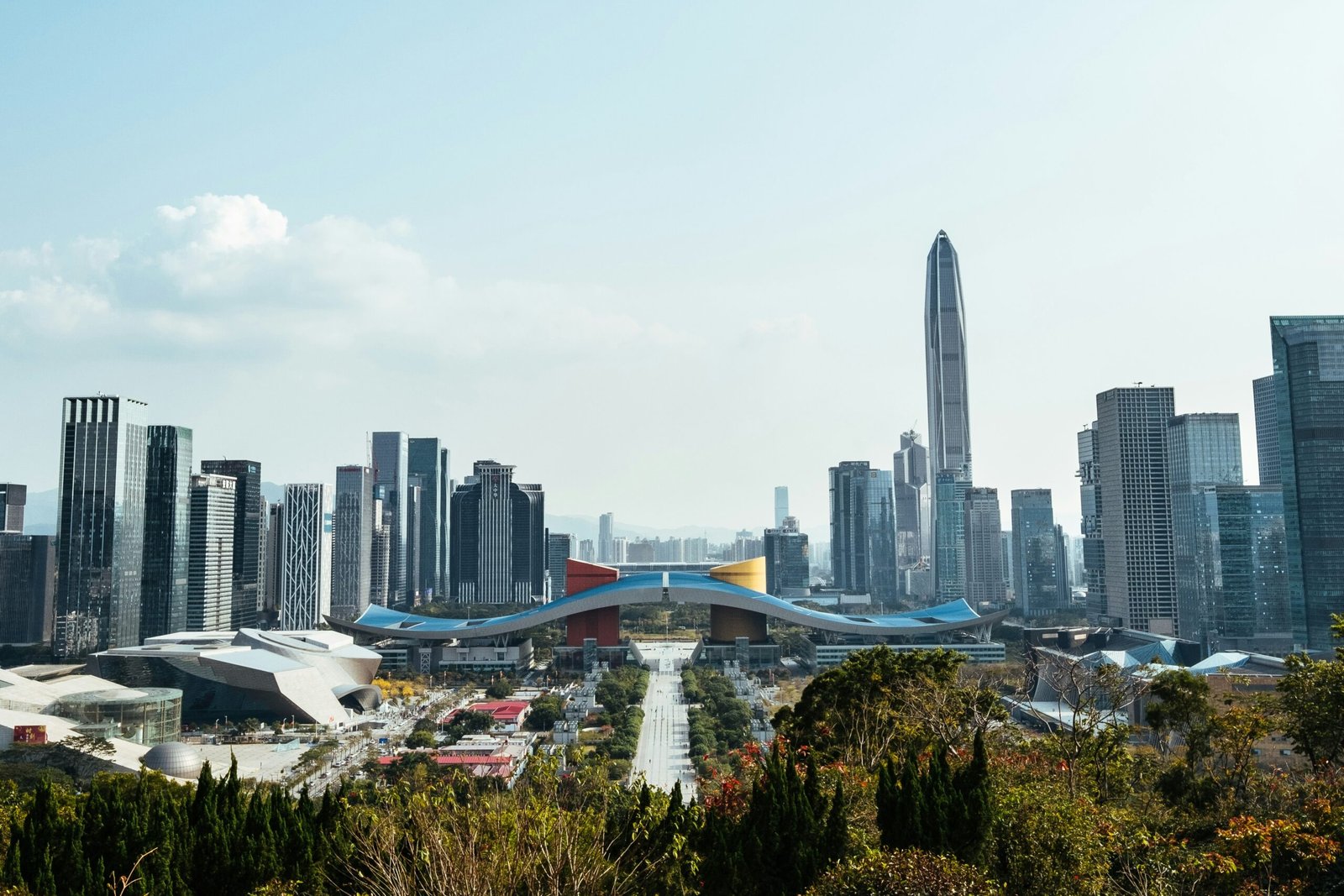
Shenzhen economy 2026 city skyline and modern skyscrapers

Shenzhen Economy 2026: Jakarta’s Bold 5-Year Preview

Shenzhen's story is genuinely useful to Indonesian executives specifically because of its timeline, not despite it. The city went from a fishing village of roughly 30,000 people in 1980 to a $537 billion GDP economy in 2025 — Shenzhen's GDP grew from 2.83 trillion yuan ($408.8 billion) in 2020 to 3.87 trillion yuan in 2025 alone, an average annual growth rate of 5.5%, the highest among China's first-tier cities (which also include Beijing, Shanghai, and Guangzhou).
Southeast Asia e-commerce market entry showing an online marketplace with product listings

Southeast Asia E-Commerce Market Entry: 6 Markets Ranked

Southeast Asia's e-commerce GMV reached $159 billion in 2024 and is tracking toward $215–230 billion by the end of 2026 — a real, substantial market by any global standard. Indonesia dominates the regional headline, holding somewhere between 28% and 41% of total GMV depending on which measure you use (platform GMV versus broader e-commerce market value), with an estimated $65 billion in 2025 GMV alone.
Fintech License Indonesia: 2 Regulators, 1 Smart Path

Fintech License Indonesia: 2 Regulators, 1 Smart Path

Indonesia's fintech opportunity is well known. The licensing path is where most foreign fintechs actually lose months — and the first reason is structural: there is no single fintech regulator to register with. Bank Indonesia (BI) governs payment systems specifically — e-wallets, payment gateways, remittance, and fund transfers — while OJK (Otoritas Jasa Keuangan), Indonesia's financial services authority, covers nearly everything else: digital banking, insurtech, wealthtech, crypto, BNPL, and P2P lending, largely under the ITSK (Inovasi Teknologi Sektor Keuangan) framework introduced by the 2023 P2SK Law.

China Desk Strategy: A $174B Wake-Up Call for ASEAN

China Desk Strategy: A $174B Wake-Up Call for ASEAN

A China Desk is a dedicated government unit — typically housed within a trade ministry, investment board, or chamber of commerce — specifically staffed and structured to manage the relationship with Chinese capital, technology transfer, and state-linked enterprises.
Southeast Asia market entry 2026 — six-market growth and opportunity comparison

Southeast Asia Market Entry 2026: 6 Markets, 1 Smart Order

Most companies plan "Southeast Asia expansion" as if the region were a single market with a single entry decision. It isn't. Southeast Asia market entry 2026 planning that treats the region as one unit typically discovers, only after budget is already committed, that Singapore's contract law, Indonesia's foreign investment rules, and Vietnam's manufacturing incentives have almost nothing in common — different regulators, different buyer expectations, different timelines to revenue.
Is Meta Dying? Inside Its $145B Bet and 2,000 Lawsuits

Is Meta Dying? Inside Its $145B Bet and 2,000 Lawsuits

The honest answer is: the data doesn't yet support "Meta is dying," but it does support "something changed, and Wall Street noticed." Meta's daily active people (DAP) fell from 3.58 billion in Q4 2025 to 3.56 billion in Q1 2026 — a loss of roughly 20 million users and the company's first-ever sequential decline in this metric. It also missed Wall Street's forecast of 3.62 billion.
AI regulation in ASEAN and Southeast Asia

AI Regulation in ASEAN: The $490M Push for Greater Control

AI regulation in ASEAN refers to the growing set of laws, policies, standards, guidelines, and governance frameworks that shape how artificial intelligence can be developed, deployed, and used across Southeast Asia.
QRIS cross-border payment network connecting Indonesia with Thailand, Malaysia, Singapore, Japan, South Korea, and China

QRIS Cross-Border Payments Expand to 6 Countries in 2026

QRIS cross-border payments are Indonesia's effort to extend its domestic QR payment standard — Quick Response Code Indonesian Standard — beyond its own borders, letting users scan a QR code to pay in a partner country using their home banking or e-wallet app, without needing local cash or a currency exchange. Indonesia's QRIS network already supports roughly 56 million domestic users and 45 million merchants, and Bank Indonesia has been steadily building outward from that base since QRIS first went live cross-border with Thailand in 2022.
Business professionals discussing PT PMA capital reform in Indonesia

PT PMA Capital Reform Cuts Entry Cost by 75% in 2026

PT PMA capital refers to the paid-up capital a foreign-owned limited liability company (Perusahaan Penanaman Modal Asing, or PT PMA) must deposit into its bank account at the time of incorporation. Under BKPM Regulation No. 5 of 2025, issued by Indonesia's Minister of Investment/Head of BKPM and effective October 2, 2025, that minimum dropped from IDR 10 billion to IDR 2.5 billion — a 75% cut, from roughly $600,000 to somewhere between $150,000 and $162,500 depending on the exchange rate used.

Start Your Southeast Asia Expansion with VentureSEA

Talk to our team to discuss your expansion goals and how we can support your go-to-market journey.

Get In Touch

Hours

VentureSEA Consulting Logo
Copyright © 2026 VentureSEA. All rights reserved.